



Blog
Renting vs Buying a House or Home: Which is Better?

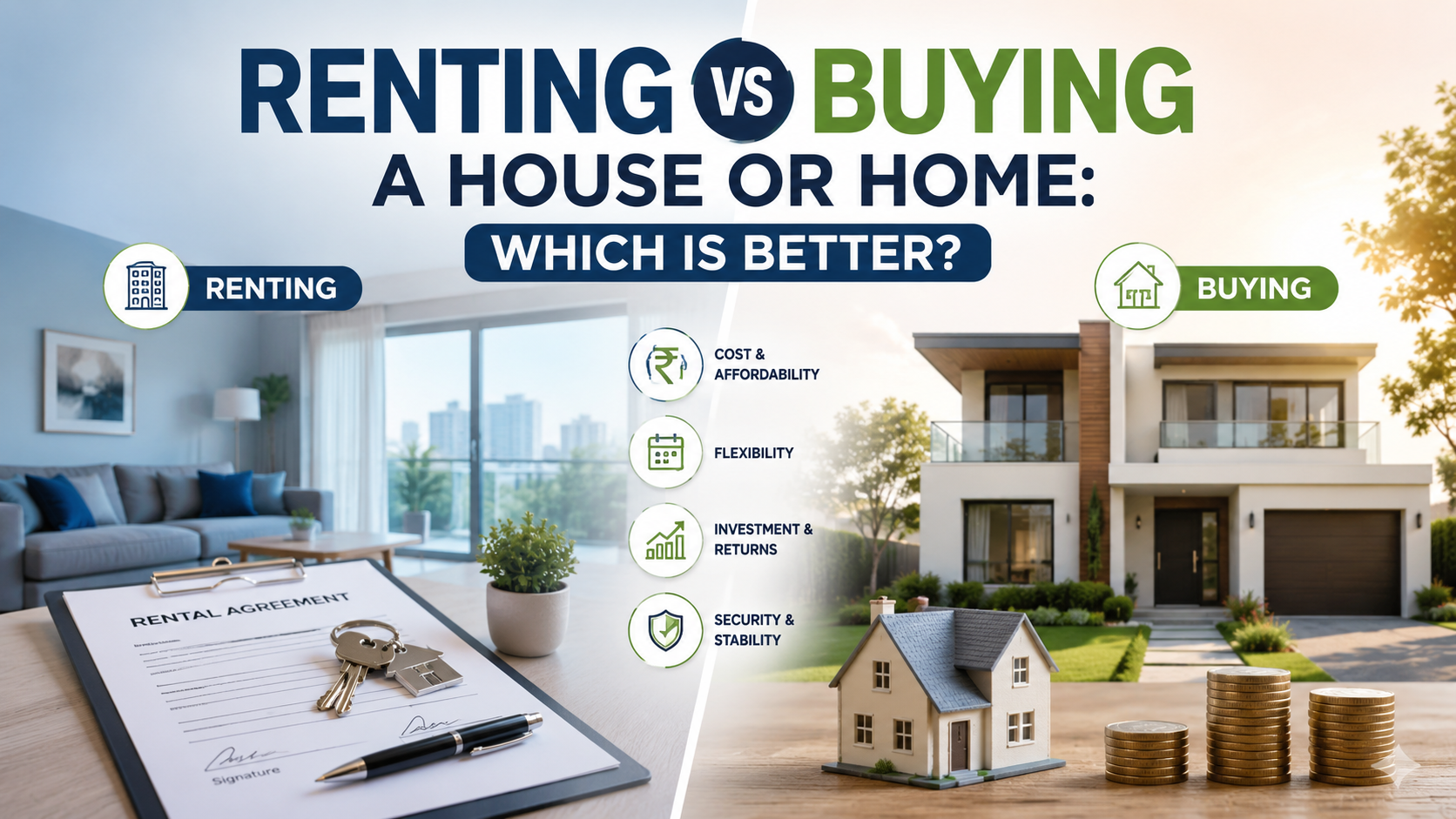
Ever sat down with a calculator trying to figure out if you should rent vs buy a home? Most people hit this point eventually, often right after a relative says renting is throwing money away. But is that actually true anymore?
Here’s the thing, buying a house isn’t the easy win it used to be. Property prices don’t always go up the way they used to. EMIs can stretch on for 15-20 years. And life today just doesn’t look like it did for our parent’s generation, job changes, city moves, career shifts happen way more often now.
So before you jump into a 20-year loan because “that’s just what you’re supposed to do,” let’s actually break down renting vs buying a house. Numbers, real costs, real trade-offs, no sugarcoating. By the end, you’ll have a much clearer answer to the question everyone’s asking: pros and cons of renting vs buying a home today?
Is Renting Better Than Buying a House?
So, is buying always the smart move? For years, the answer to this question was yes. But things have changed.

Think about it. Renting means you don’t need lakhs saved up just to move in. No down payment. No stamp duty. No registration charges eating into your savings. You simply pay rent and settle in.
Buying, on the other hand, means signing up for a loan that can run for 15 to 20 years. That’s a long time to be locked into one big monthly payment. And life doesn’t always go as planned. Jobs change. Cities change. Priorities change too.
Plus, here’s something people often forget, property prices don’t always go up the way we expect. So buying isn’t the “guaranteed win” it used to be.
Renting, meanwhile, gives you room to breathe. You can move when you want. Save when you want. Even invest that extra money instead of parking it all in one property.
So yes, in most cases today, renting really does make more sense.
What Is the 5% Rule for Rent vs Buy?
Ever heard of the 5% rule? It’s a simple way to figure out if buying vs renting a home makes more sense for you.
Here’s how it works. Take the price of a house. Now, work out 5% of that value for a year. If your yearly rent is less than that number, renting is the better deal. If it’s more, buying might make sense.
So, why 5%? That number roughly covers things like maintenance, property tax, and the cost of your money being tied up instead of invested elsewhere.
In most Indian cities today, rents are still way below that 5% mark. Which basically means renting is quietly saving you more money than you’d think.
The 5 rule renting vs buying isn’t a perfect formula, but it’s a quick, easy way to check before making a big decision.
Advantages of Renting a House vs Buying
Renting is not only cheap but also offers considerable advantages. Let’s go through renting vs buying a house, so you can see why so many people are choosing to rent today.
1. Lesser Upfront Cost
Buying a house means saving up a huge amount before you even move in. Down payment, registration, stamp duty, it all adds up fast. Renting skips all that. You just pay a security deposit and the first month’s rent, and you’re good to go. That’s it. No years of saving just to get the keys.
2. No Long-Term Debt
A home loan may take up to 15 to 20 years to pay off. You need to understand the loan’s repayment term, because that’s a significant period of time in terms of commitment. Renting doesn’t tie you down like that. You pay monthly, and if things change, you’re not stuck paying off a massive loan for the next two decades.
3. You Can Move Whenever You Want
Life doesn’t always stay the same. A new job, a better opportunity, or just wanting a change of city, renting makes all of this easy. You’re not stuck trying to sell a house first. You simply pack up, give notice, and move on with your life.
4. Fewer Hidden Costs
Owning a house comes with a lot of extra costs people don’t talk about. Repairs, maintenance, society charges, they all add up over time. When you rent, most of these costs fall on the landlord, not you. That means fewer surprise expenses and more predictable monthly spending.
5. Better Use of Assets
Instead of locking away lakhs in a down payment, renting vs buying a house lets you keep that money working for you. You can invest it, grow it, or use it for other goals. Buying ties up your money in one place, while renting gives you more freedom to use it wisely.
Also see: Sector 18 Noida: Location, Shopping & Area Guide
Why Is Buying a House Riskier Today?
Buying a property used to be considered the “safe” route, but that is no longer the case. Nowadays, there are quite a few risks that people neglect or are even ignorant of when purchasing a house and finalizing the loan agreement.
1. Property Prices Don’t Always Rise
Normally people feel that the prices and value of a house will just go up the entire time. But this is not true at all. In many cities, property prices have stayed flat for years, or grown much slower than expected. So the idea that buying is always a “safe investment” doesn’t really hold up the way it used to. Sometimes, the numbers just don’t work in your favour.
2. Loan Pressure
Getting a home loan means that a significant part of your earnings will go to the bank every month for 15 to 20 years. Imagine that when you think about rent vs buy. That is a long span of time. In this time frame, a lot can change your job, salary, family responsibilities, etc. And no matter what happens, that EMI still needs to be paid every single month. It’s a heavy, long-term pressure that doesn’t really go away until the loan is fully cleared.
3. Changes in Interest Rate
Most home loans come with interest rates that can change over time. If rates go up, your EMI goes up too, even if you’ve already been paying for years. This means your monthly budget isn’t as fixed as you’d expect. What starts as an affordable EMI today could quietly become a lot heavier a few years down the line.
4. Resale Isn’t Easy
Selling a house is not that fast. Looking for the right buyer, bargaining on a reasonable price, and doing all the paperwork involved, it can be a couple of months or even years. In situations when you want to leave your home immediately or get money really fast, selling a house is not an easy solution. Comparatively renting is easier since the only thing you do is inform your landlord of your leaving.
5. Hidden Costs
Purchasing a home is not simply a matter of paying the listed price. There are additional costs to think about like registration, stamp duty, intermediary fees, and maintenance over time. Most people do not factor in these extra costs correctly. By the time everything is added together, buying a house vs renting an apartment often ends up costing a lot more than the original number ever suggested.
What All Can a Rent vs Buy Calculator in India Tell You?
Not sure whether to rent or buy? A rent vs buy calculator can help you figure that out, without needing to be a finance expert.
Here’s how the rent vs buy calculator in India works. You enter a few basic details, the cost of the house, your monthly rent, the down payment amount, loan interest rate and house appreciation rate. The calculator then does the maths for you.
What you get back is simple. It shows you which option actually costs less over time, once you factor in EMIs, rent, maintenance, taxes, and even what your money could earn if invested instead of spent on a down payment.
For anyone who is not that informed about rent vs buy in India, this is useful because it removes the guesswork. You’re not just going by gut feeling or what your relatives suggest. You’re looking at real numbers, based on your own situation.
Most calculators also show the wealth calculation difference, after which you can decide which option makes more financial sense.
Rent vs Buy Around the World
Turns out, this isn’t just an Indian thing. People everywhere are asking the same question right now. Here’s a quick look at how renting vs buying a house is playing out in a few countries.
1. India
In Tier-1 and Tier-2 Indian cities, buying is so much more expensive than renting. In places like Mumbai and Bangalore, property prices can be 25-30 times the yearly rent. For people moving away temporarily for work or even permanently, renting is a more affordable alternative. With the Cost of Living Index already higher in these cities, you can’t afford to put your entire salary in just a mortgage for your home.
2. UK
Buying a house vs renting a house in the UK often costs less monthly than renting, with average mortgages on a £268,000 property tracking at £1,000–£1,200 compared to average rents of £1,275. But buying still means finding a decent deposit upfront, plus extra money for legal fees. Renting, on the other hand, just needs a security deposit, and any repairs are the landlord’s problem, not yours.
3. Dubai
Dubai is a bit more mixed. Rents have climbed fast, and in some areas, owning is now working out cheaper monthly. But this really depends on how long you’re staying since areas like Dubai Marina still favour renting if you’re there under 7-8 years. So if you’re not planning to settle long-term, renting still makes more sense here too. You can also use a rent vs buy calculator Dubai for a better idea.
4. Australia
Australia makes the case for renting vs buying a house pretty clearly. In Melbourne, renting a house works out about 66% cheaper than buying one, and research shows renting is cheaper than buying in every single Australian capital city. With property prices at record highs, renting is a worthy option.
Renting vs Buying Furniture: Pros & Cons
Buying vs renting a home isn’t the only decision people rethink these days. Furniture is another one. If you’re renting a home, chances are you’re also wondering whether to buy furniture or just rent that too. Let us break it down for you in a simple table format!
| Factor | Renting Furniture | Buying Furniture |
| Upfront Cost | Low, just a small monthly payment | High, pay the full price at once |
| Flexibility | Easy to swap, upgrade, or return | Stuck with the same pieces long-term |
| Moving Homes | Simple, just relocate or return items | Heavy, expensive, and a hassle to shift |
| Maintenance | Often included or handled for you | You handle repairs and servicing yourself |
| Long-Term Cost | Works out cheaper if you move often | Better value only if you stay put for years |
| Commitment | Short-term, easy to change your mind | Long-term, harder to change later |
If you’re renting your home anyway, renting your furniture just makes sense too. It keeps things simple, saves money upfront, and means one less thing to worry about when life changes.
Wrapping Up
After this detailed breakdown of renting vs buying a house, and taking all the factors into account, renting really does feel like the option most people will stick to today. It costs less upfront, doesn’t tie you down with debt, and gives you the freedom to move whenever life changes.
Buying isn’t a bad choice, but it works best only if you’re settled somewhere for the long run. Otherwise, renting vs buying in India simply makes more sense right now, whether it’s your home, or even your furniture.
By the way, let’s just talk about furniture. You’re the tenant, so why do you need to purchase the furniture? Frequip offers you the chance to rent good furniture and appliances without having to pay the full price upfront or making an agreement that is long-term.
FAQs
Is it better to live on rent or buy a house?
For most people renting vs buying a house is a tough choice. Renting is the better option these days. It costs less in the beginning, you stay flexible, and you don’t get stuck with a big loan for years. Buying only makes sense if you’re planning to stay in one city for a long time.
What is the 2% rule for properties?
This rule says the monthly rent should be at least 2% of the house price for it to be a good deal. So if a house is ₹50 lakh, rent should be around ₹1 lakh a month. But in most Indian cities, actual rent is much lower than that.
Is it better to buy or rent?
Depends on your situation. But renting usually wins if you shift cities often, don’t have a big emergency fund saved up, or want to put your money in investments instead of a down payment.
What is the 20/30/40 rule for buying a house?
This one rule says, pay at least 20% as down payment, keep your monthly home cost under 30% of your income, and save the rest 40% for other things. It’s a simple way to check if a house is actually affordable for you or not.
Will property prices fall in 2026 in India?
Not really, no big signs of that happening. Most metro cities are still seeing prices go up, just a bit slower now. So if you’re not planning to buy right now, renting is the safer choice for the time being.
What are the pros and cons of renting?
Pros are simple, less money needed upfront, more freedom to move, and no maintenance tension. Con is, you don’t build any ownership over time. But for most people today, the pros are still worth it in the rent vs buy decision.
For more such content, check out Frequip.