



Blog
Is 25 TDS Safe For Drinking Water? A Must-Read Guide!

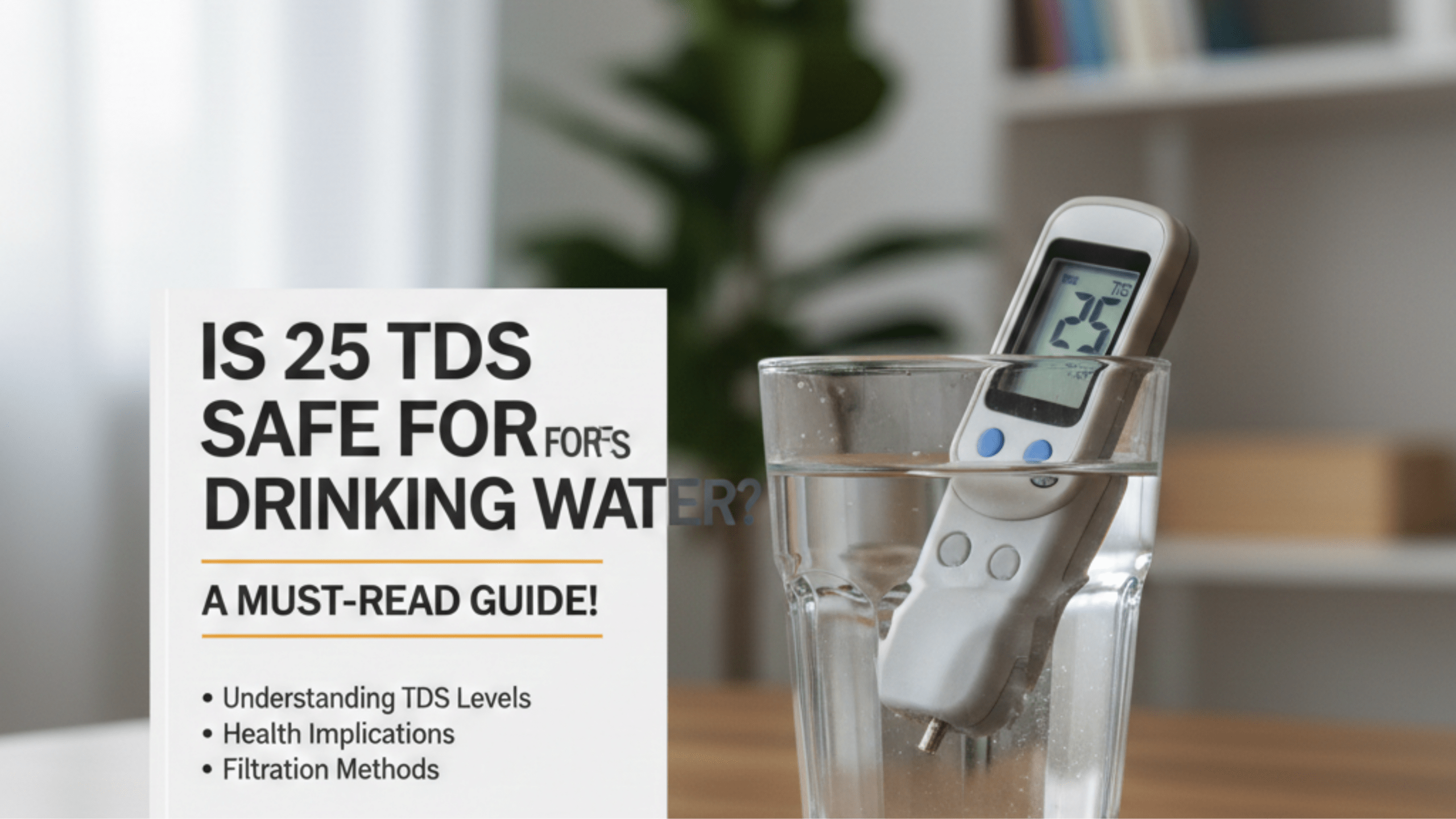
Many great men have quoted about the importance of water for life. However, not every drop we drink today is completely pure. Every glass comes with a likelihood of contamination, impurities, and chemicals. This curiosity around water purity brings us to terms and concepts like TDS, or total dissolved solids.
So, what is TDS? Why is it necessary? Most importantly, is 25 TDS safe for drinking water?
Total dissolved solids, or TDS, hint whether water is fit for drinking or not. Considering that, we will dedicate this blog post to decoding the concepts of TDS. Keep reading!
What is TDS in Drinking Water?
TDS, with a full form of total dissolved solids, are the total concentration of organic or non-organic substances in water. These can be magnesium, calcium, solids, potassium, salts, and heavy metals. Anything dissolved in water other than H2O, TDS can be a measure for that. It can come from any source, including home plumbing systems, water treatment chemicals, and natural springs.

Why is TDS Important in Drinking Water?
TDS or total dissolved solids holds a notable importance in drinking water, and here are the reasons why:
Taste and Smell
The taste and smell of water are crucial, as they tell about its quality. Extremely high TDS concentration can bring a bitter or salty flavour, while moderate levels can have a better taste.
Health Impact
It’s not high TDS that you have to be concerned about. Instead, it’s a few materials that can be harmful, such as copper and lead.
Filter Maintenance
Regular TDS testing can be an indicator of your water filter’s health. It can also share alerts about the need for water filter maintenance.
Cooking
Water is a must-have for cooking, and TDS in it can impact the food’s taste as well.
Appliance Health
High TDS can push the buildup and reduce the efficiency of plumbing appliances and heaters.
Is 25 TDS safe for drinking water?
Let’s start with the very basic and the same concern that the title suggests! Is 25 TDS safe for drinking water? To be precise, yes, it is safe for consumption if you are considering it for the short term. However, it is not completely suitable for long-term consumption due to its lack of nutritional benefits and minerals. It can also pose a rising risk of dissolving metals from the pipeline.
Pros and Cons of Drinking Water with 25 as TDS
As of now, you have gained clarity on how TDS can make a major difference. In this section, let us go into depth:
Pros:
- You get access to extremely pure drinking water.
- It offers a safer water drinking solution.
- It can be helpful for appliances, along with drinking.
Cons:
- A lack of minerals can cause a deficiency, which may result in further problems.
- It can deliver a plain or bland taste that makes water less drinkable.
- Low TDS water doesn’t hydrate properly.
- This form of water can have a corrosive nature.
What Do You Need to Know About the TDS Levels?
High TDS levels also refer to excess minerals, salts, or contaminants. Drinking high TDS water can impact the taste and health. As a result, you may need filtration systems.
Low TDS levels indicate that it is RO or distilled water that lacks the necessary minerals. This level of water may even need remineralisation.
Let us give you a detailed description so you know about the ideal TDS for drinking water:
- 50-150 ppm: Ideal
- 150-250 ppm: Good
- 250-300 ppm: Decent
- 300-500 ppm: Bad and Unsuitable
- 1200+ppm: Highly unadvisable
Note: Water ppm meaning- ppm is parts per million
Ideal TDS Level for Drinking Water in India
Now you know how many ppm in water is considered safe for consumption. In India, 100-150 ppm is ideal. This can bring a balance of taste and minerals. However, BIS or the Bureau of Indian Standards has set 500 as the maximum acceptable limit. This means that the TDS levels must not surpass 500 and should generally be less.
Health Effects of Drinking Very Low TDS Water
As of now, you have YES as the answer to your question- Is 25 TDS safe for drinking water? You also know that consuming low TDS water (generally less than 50ppm) can result in mineral deficiencies and several long-term risks. In the further section, let us see how it can impact health in the long term:
Electrozlyte Imbalance
Water with low levels of TDS or totally disolvable solids doesn’t contain essential minerals in sufficient quantity. These can be calcium, potassium, and magnesium, among others. This can disturb your body’s natural electrolyte balance, which is necessary. Electrolytes are responsible for the electrical signals our muscles, nervous system, and heart need.
Mineral Deficiency
The absence of necessary electrolytes in low TDS water, such as magnesium and calcium, can result in mineral deficiency. These minerals are essential for your bone health, metabolism, and cellular function. Despite being pure and contamination-free, low TDS water is generally considered unhealthy in the long term.
Digestive Issues
The absence of essential minerals, such as magnesium and calcium, in low TDS water can cause digestive issues as well. The disrupted electrolyte balance can cause mineral deficiencies, impacting the ph balance of the stomach. In the long term, this can impact the metabolic processes, resulting in constipation or cramps.
Fatigue
The lack of essential minerals seems to have flagged another condition. Magnesium and calcium are necessary for muscle functions and energy. The imbalances caused by low TDS water can disrupt your body’s water/salt balance, promoting a further loss of electrolytes.
Does RO Water Often Have Very Low TDS?
Have you ever thought about the TDS levels of purified water? Did you know that reverse osmosis water often comes with low TDS? The reverse osmosis process can effectively get rid of impurities from water and make it safer to drink. However, it can also remove the necessary minerals, which can result in low levels of TDS or Total Dissolved Solids. The TDS levels can go lower than 50 ppm. This can happen with high-pressure processing of water through a fine membrane.
There are some other ways through which RO strips away the TDS levels of water. The extremely small pores of RO leave a very small space that is only sufficient for water to go through.
Fortunately, there is a solution!
The Modern RO Solution
Many modern RO solutions are available today. This can happen with the use of technologies that bring back the essential materials your body needs. They also work by balancing pH and removing some raw water.
All in all, water undergoing reverse osmosis processes can be safer to drink. However, it may need a mineralizer or TDS controller to balance out the minerals. The ROs available in the present day are designed in a manner to balance out the TDS and not remove it completely.
Here is what you can do next if your RO gives 25 TDS water:
- Use a TDS controller: This can work by adding beneficial materials through special cartilage. It can also work by mixing a small batch of mineral-rich water back.
- Mix water on your own: If you don’t have a leading-edge water purifying system, you can manually mix the water.
- Reconsider your water filter: This is where a notable difference can come. You can always look to install a UV-supported purifier. It’s important to know which purifier works when.
Have a look here-
- Reverse osmosis can work for TDS in water above 300 mg/L
- A UV-supported filter is ideal if the TDS is low
- UF can work well for visible impurities and TDS
How to Maintain the Right TDS Level in Drinking Water?
We have discovered the measures to balance the TDS levels in drinking water for a long time. Let us now talk about things to keep up the TDS for drinking water.
Here’s what you should do:
- Check the TDS level of water regularly.
- Perform regular servicing of the water filter to get proper functioning and ideally regulated TDS.
- Do not overpurify, as this can eliminate the necessary elements and components needed.
- Keep a balance of water purity, and ensure the TDS of the water is also monitored.
- Avoid consuming water directly from untreated sources, as they can be hazardous to health.
Conclusion: Is 25 TDS Water Safe for Daily Consumption?
To sum it up, yes, water with 25 TDS is considered safe for consumption. However, it’s a no if we’re talking whether 25 tds water is good for health. This is not an ideal or long-term recommended solution. Water with TDS less than 50 can also have minimal minerals for your body. This can result in deficiencies, electrolyte imbalance, digestive issues, fatigue, and similar impacts.
Ideally, the TDS of water should be from 50-150ppm. Water with TDS less than 300 ppm is also considered safe and ideal for consumption.
If your water filter impacts the TDS of water, there are several ways to balance this out. You can start by using a TDS controller, as that can balance out the minerals. You can manually mix the water or use the water filter that offers options to do so. Additionally, you should check the TDS of water regularly. You should get your purification system checked and serviced regularly.
Remember: Safe Drinking is Safer You!
Frequently Asked Questions (FAQs)
What is a good TDS for RO water?
The ideal TDS for water to be considered safe for drinking can be anywhere from 50ppm to 150 ppm. This level can bring the ideal balance of health and taste. TDS level upto 300 ppm is also good and acceptable for consumption. It is safe and has more minerals.
What if the water TDS is 20?
20 is pretty low for water TDS and can lack necessary minerals like magnesium and calcium. Besides, this level of TDS can manifest in flat-tasting water. In the long term, this can result in digestive problems and poor hydration.
What is the TDS of Bisleri water?
Bisleri water has a TDS of 150 ppw, which is considered ideal for drinking. This TDS can have the balance of necessary minerals.
Is low TDS bad for health?
Yes, low TDS levels are not healthy, as they can have a deficiency of minerals and other electrolytes our body needs.
Is 25 TDS water good?
For the short term, yes! However, for the long term, water with a lower TDS, such as 25, can result in deficiencies and further complications.
Does boiling water reduce TDS?
No, it doesn’t. However, on the contrary, boiling water can increase the TDS as the mineral residues remain after water evaporates.
Is 70 TDS safe for drinking?
Yes, 70 TDS is safe for drinking. In fact, it can also give you a better taste when drinking.
Is 300 TDS good for hair?
300 TDS is generally acceptable. It is considered safe, but still falls under the borderline.
What if TDS is below 50?
The water with TDS less than 50 can have lower minerals, even though it is generally considered safe.
What if we drink 30 TDS water?
30 TDS water will be safe. However, you should not consume water with low TDS, like 30, for a long time.
Is 200 TDS safe for drinking water?
Yes, it is.
What is the ideal TDS of drinking water as per WHO?
As per the WHO, the TDS levels of less than 1000mg/litre are acceptable, depending on circumstances. However, the TDS levels from 50-150mg are considered safe. The levels can go from 150 to 300mg as well.